International recognition for an approach to daylight simulation that combines digital control with physical experimentation.
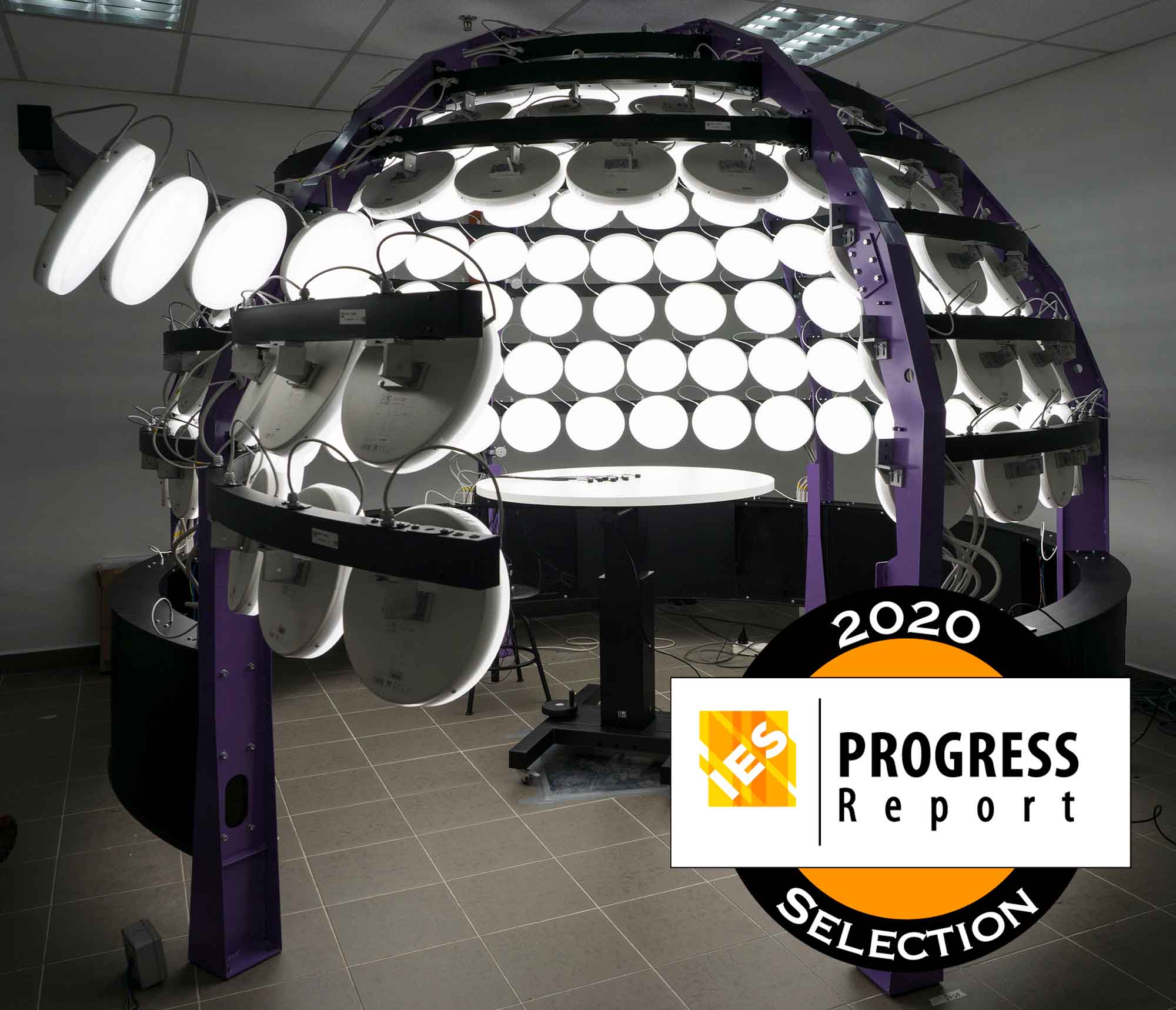
In 2020, Durian Artificial Sky was selected for the Illuminating Engineering Society’s Progress Report in the Design Tools category.
Founded in 1906, the Illuminating Engineering Society (IES) is a leading technical and educational organisation in the field of lighting. Its Progress Report, published annually in LD+A magazine, features products, research and tools that represent significant advances in the art and science of lighting. Submissions are assessed by the Progress Committee through an impartial evaluation process based on their uniqueness, innovation and significance to the lighting industry. Durian’s inclusion can be found in the complete 2020 Progress Report (PDF).
For us at Betanit, this recognition highlights an approach that deserves greater attention: combining digital control with the direct experience of a physical model. Our aim is not simply to help designers represent an idea, but to give them tools to question it, compare alternatives and discover unexpected possibilities.
Durian is a dome-shaped artificial sky with 145 individually controllable LED-lit sectors, designed to reproduce different sky conditions. It allows students, researchers and designers to study daylight through architectural scale models, bringing observation and measurement into the design process.
An opening can be repositioned, a shading element adjusted or a material replaced. The model can then be examined again under the same lighting conditions, allowing the effects of different design choices to be compared. At the University of Malta, the installation combines Durian with a Lemon heliodon and measuring instruments, enabling users to observe light and shadow and measure illuminance within scale models.
The value of this approach lies not only in verification, but also in the freedom to explore. We do not see physical simulation as a replacement for software, but as a complementary way of thinking and designing. The computer controls the simulated conditions; the model remains open to direct intervention, discussion and discovery. Designers can move from hypothesis to experiment, observe the results and return to their original idea with a more concrete understanding.
This also reflects our vision of architectural education. We believe that testing a design should be as important as presenting it. An unexpected result is not necessarily an error to eliminate: it can reveal a limitation, suggest a different question and open up a previously unexplored direction. Experimentation becomes an opportunity to expand thinking, rather than simply confirm a solution already chosen.
Selection for the 2020 IES Progress Report represents an important milestone in our work. Above all, it encourages us to continue pursuing what we believe in: developing tools that support more informed design without limiting creativity.
Simulation should do more than verify what we have already imagined. It should help us imagine more.